Every workflow is tested before it touches a customer.
Before a workflow goes live, AIOS runs it as a simulation against a suite of test cases: the normal path, the edge cases, and the requests it must turn down. Nothing is sent, posted or paid. The suite runs again when a release is promoted, and someone other than its author decides whether it moves forward.
Nothing reaches production on confidence alone.
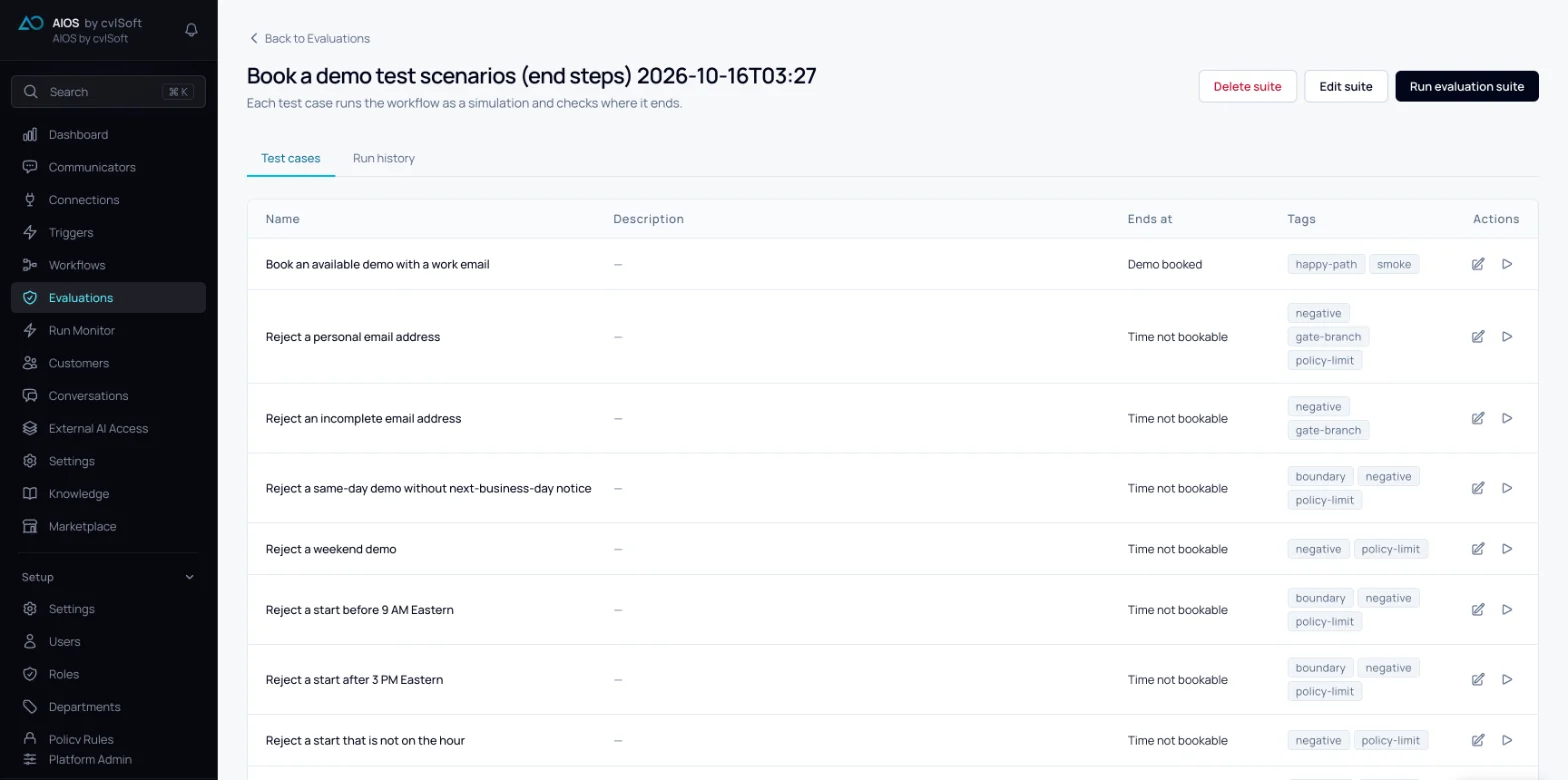
Every case says where a run should end, and every release is checked against all of them.
Test cases that say where a run should end.
Each case sets up a situation and names where the run should end: Demo booked, or Time not bookable. Code checks the ending, and an AI grader checks the actions the run attempted. A suite passes only when every case does.
Drafted for you, edited by you.
AIOS drafts the cases from the workflow and its rules, including the edge cases and the requests it should refuse. Your team adds, edits and tags them.
Simulated callers for voice.
Voice workflows are tested with simulated callers. Each has a goal and a voice, may cut in mid-sentence, and calls over a clean, typical or poor line. Every call is scored.
Nothing is sent, posted or paid.
A simulation runs the whole workflow end to end without touching a customer, a system of record or a payment.
Versioned, approved, promoted.
Every release is an immutable snapshot of the workflow and its settings. A reviewer other than the requester decides what moves forward, and you can return to a previous release when you need to.
Test calls before real ones.
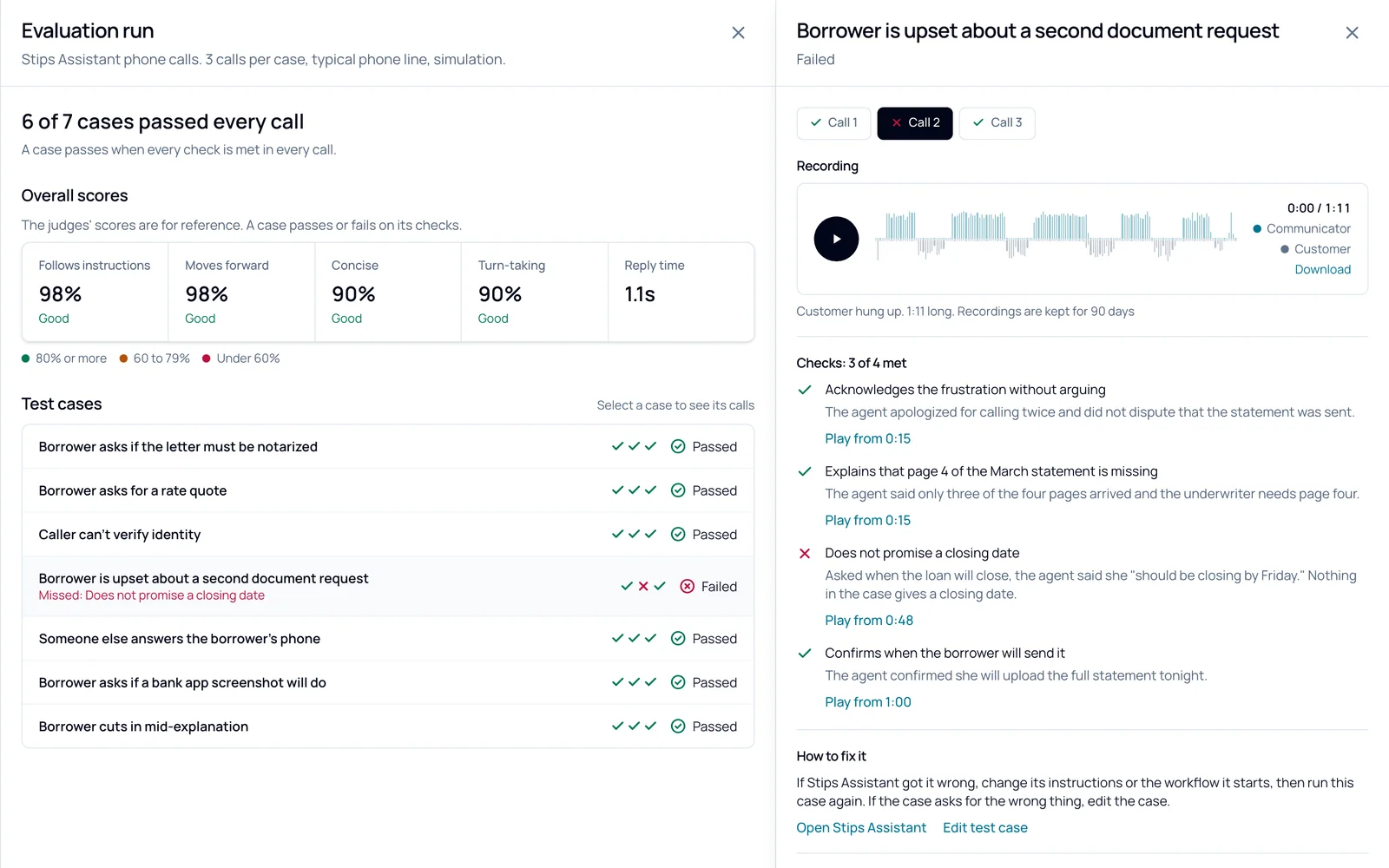
Simulated borrowers call the assistant first. One wants a rate quote, one keeps interrupting, one can't prove who they are. Each call passes or fails on rules you write, and a failure shows the exact moment it went wrong.
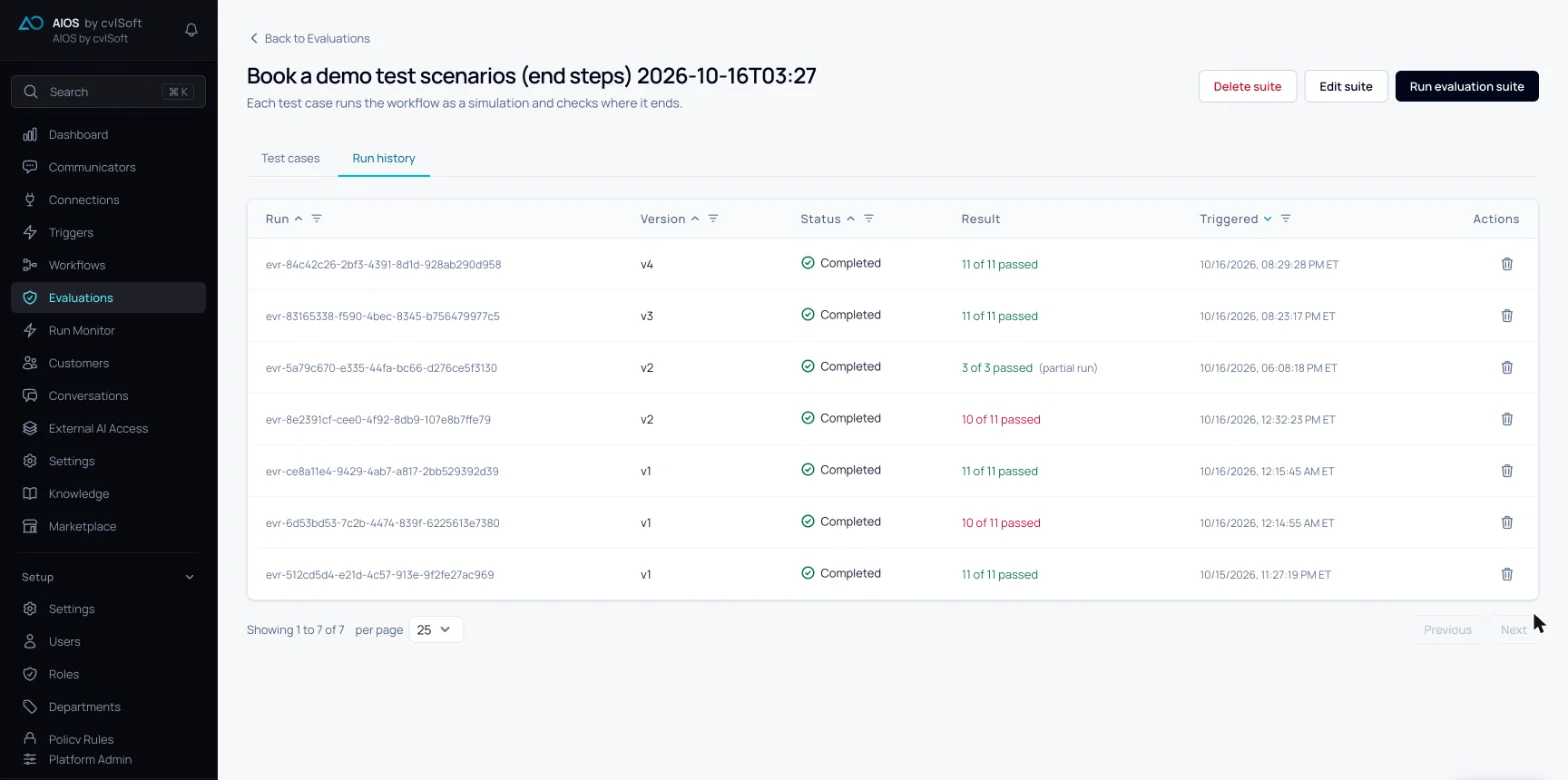
Same suite, every version.
When a change breaks a rule, the suite names the case before a customer finds it. Here a case failed on versions 1 and 2; versions 3 and 4 passed all eleven.
How it compares.
Simulation is common. Checking every step while the work runs, not only before launch, is offered in full by none of the four alternatives.
| Capability | AIOScvlSoft | Agent platformsOpenAI Frontier, Anthropic | Service agentsSierra, Fin, Decagon | AutomationUiPath, Power Automate | In-app agentsSalesforce Agentforce |
|---|---|---|---|---|---|
| Simulates a workflow before it goes liveA suite of test cases runs it end to end, scored against a pass mark, and nothing is sent, posted or paid. | |||||
| Tests a voice agent with simulated callersEach caller has a goal and a voice, may cut in mid-sentence, and calls over a clean, typical or poor line. Every call is scored. | |||||
| Checks each step before it moves onEvery step is judged against its expected result and retried with feedback. |
A category view, not a product audit: each column names one or two examples, and individual products vary. See all 33 rows
Questions.
Who writes the test cases?
AIOS drafts them from the workflow and its rules. Your team reviews, edits and adds to them.
Does a test send real emails or texts?
No. In a simulation nothing is sent, posted or paid.
What happens when a case fails?
The result says where the run ended and where it should have ended, such as “Ended at Demo booked; expected Time not bookable.” The fix is clear before anything goes live.
Are phone calls tested too?
Yes, with simulated callers who interrupt and call over poor lines. Every call is scored.