Every action behind your rules, and on the record.
Governance isn't a setting in AIOS. It's the path every execution runs through. Every action is policy-gated: AIOS checks it against your policies before it reaches a system of record, and you add rules where your process needs them, in plain language. Nothing happens that you can't reconstruct afterward.
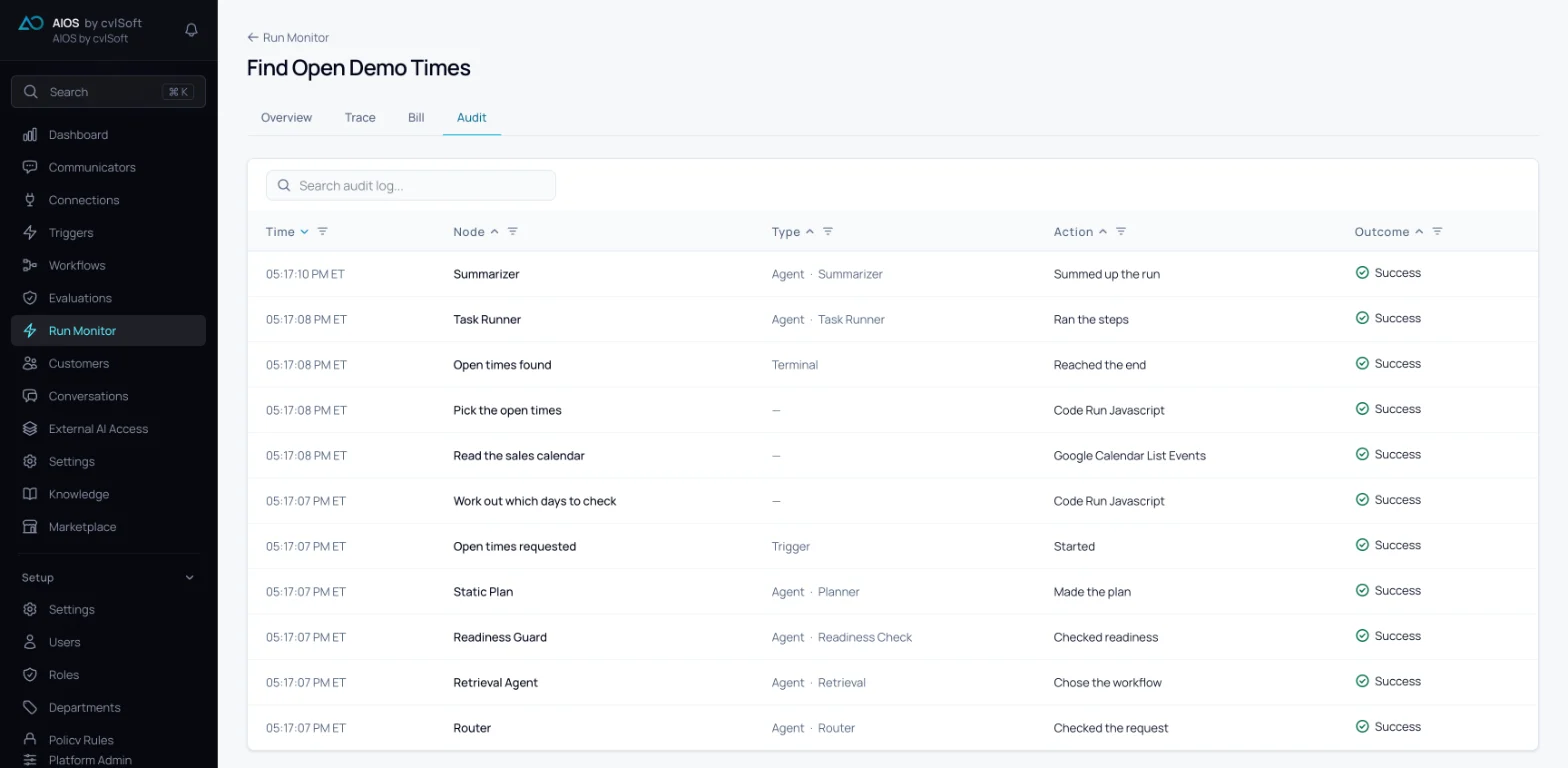
Autonomy you can hand to an auditor.
Controls, not adjectives. Each one is something a security review can be shown.
Plan before execute.
AIOS plans before it acts, and checks each tool call against a deterministic policy engine, with per-tenant overrides, before it touches a system of record.
Your policies, in your words.
Tell the AIOS agent a policy as you would tell a new hire, and it writes it as a rule: deny the action, require an approval, allow it, or log it. It reads the rule back in plain language and shows which steps it would catch before anything changes.
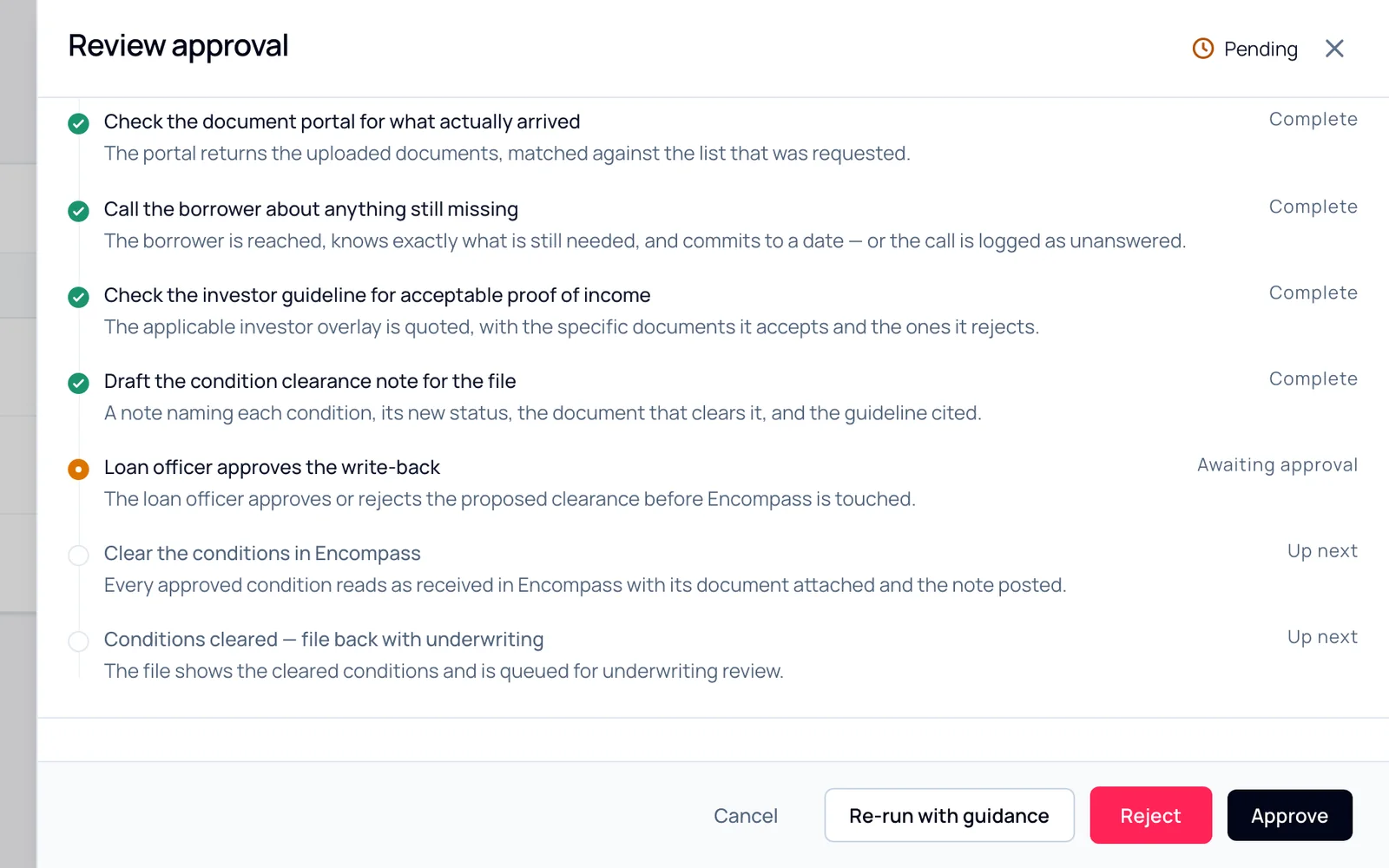
An expert signs off on the steps that matter.
Put an approval gate on any step. The run pauses for an expert's sign-off, and the decision is recorded alongside the execution it authorized.
An immutable audit ledger.
Every action, input and output is written to an append-only log. Months after the fact, reconstruct exactly what ran, on whose authority, and why.
Kill switches, circuit breakers and spend caps.
Halt one run or the whole account instantly. Breakers trip on their own when cost, error rate or scope leaves the band you set.
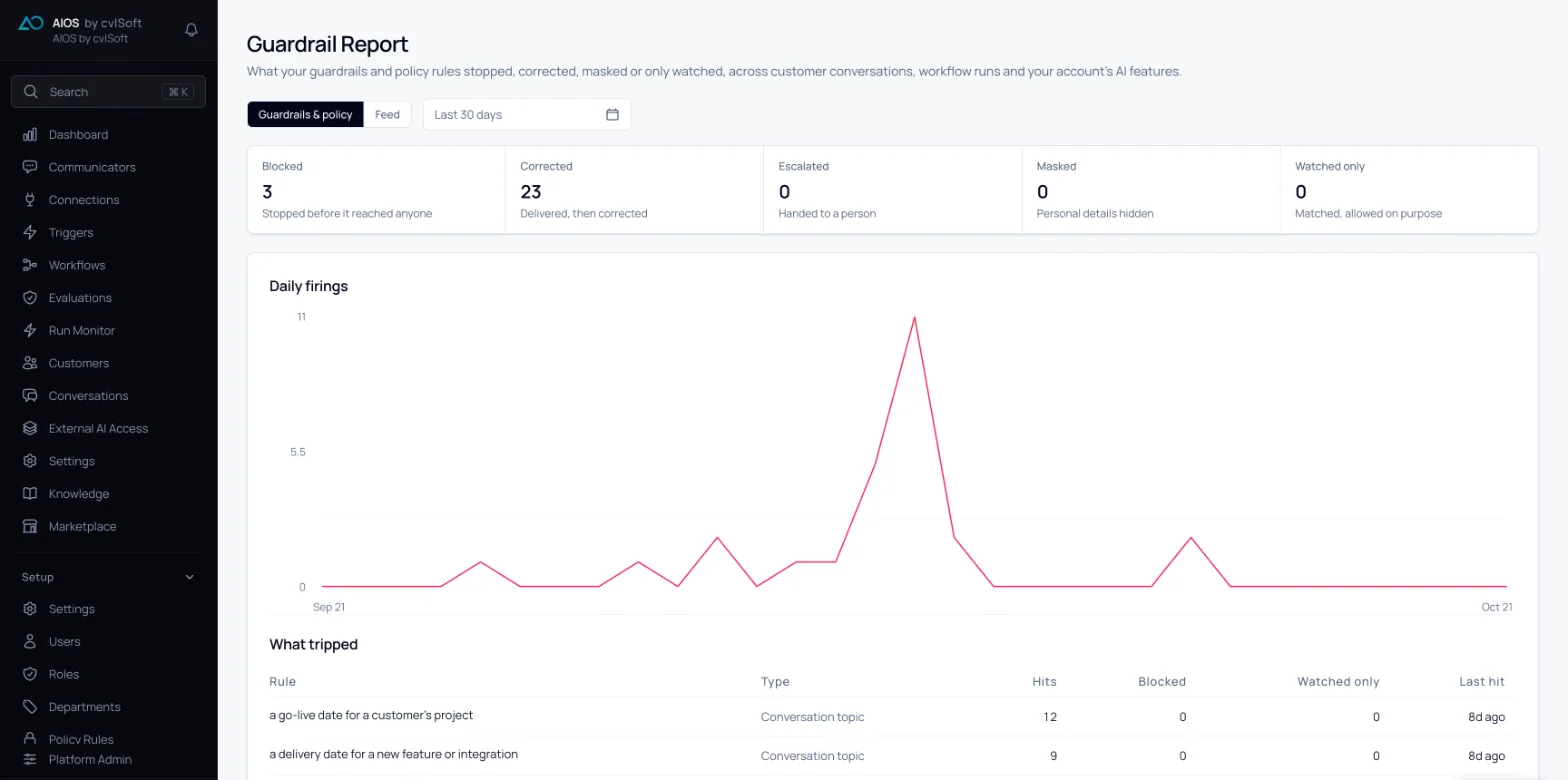
Guardrails, reported.
Personal data masked, prompt injection refused, ruled-out topics kept out of replies, and a report of every time a guardrail or policy rule fired.
Who can do what.
Single sign-on with Entra ID, Google or any SAML provider, SCIM provisioning, passkeys and two-factor codes, custom roles, departments and scoped API keys.
Your data stays yours.
Your data stays isolated in your tenant, no model is retrained on it, and AIOS can run in your own cloud.
The run waits for the expert.
When a step needs sign-off, the run stops before it changes anything. The loan officer sees what's done and what's next, then approves it, rejects it, or sends it back with guidance. The decision is recorded beside the run.
Every firing, counted.
Blocked before it reached anyone, corrected, handed to a person, masked, or only watched: the report shows which rule fired, how often, and what it did.
How it compares.
Two of these are offered in full by none of the four alternatives: rules written from your policies in plain language, and kill switches, circuit breakers and spend caps together.
| Capability | AIOScvlSoft | Agent platformsOpenAI Frontier, Anthropic | Service agentsSierra, Fin, Decagon | AutomationUiPath, Power Automate | In-app agentsSalesforce Agentforce |
|---|---|---|---|---|---|
| Every action is policy-gatedChecked against your rules before it reaches a system of record: deny, require approval, allow or log. | |||||
| Writes rules from your policies, in plain languageDescribe a policy and the AIOS agent writes the rule, shows what it would catch, then waits for your yes. | |||||
| An expert’s sign-off on the steps that matterThe run pauses, and the decision is recorded beside the action it authorized. | |||||
| An immutable audit ledgerMonths later, reconstruct what ran, on whose authority, and why. | |||||
| Kill switches, circuit breakers and spend capsHalt one run or the whole account. Breakers trip on cost, errors or scope. | |||||
| Guardrails on what it saysMasks personal data, blocks prompt injection and stays off banned topics. | |||||
| Single sign-on, SCIM provisioning and passkeysEntra ID, Google or any SAML provider, with two-factor codes. | |||||
| Custom roles, departments and scoped keysPeople and integrations see only what their work needs. |
A category view, not a product audit: each column names one or two examples, and individual products vary. See all 33 rows
Questions.
What about actions our rules don't mention?
Actions on systems you've connected are allowed unless a rule says otherwise, and you add rules where your process needs them: deny, require an approval, or log. Every action is checked against them before it reaches a system of record.
Does someone have to write the rules in code?
No. Describe the policy to the AIOS agent, such as "refunds over a set amount need a manager's approval". It writes the rule, shows you which workflow steps it would catch, and saves nothing until you confirm. From then on the rule is checked in code on every action, the same way every time.
Can we reconstruct a decision months later?
Yes. The audit ledger records every action, input and output, who approved what, and why the run did what it did.
How fast can we stop it?
Instantly. A kill switch halts one run or the whole account, and circuit breakers trip on their own when cost, errors or scope leave the band you set.
Where does our data live?
Isolated in your tenant. No model is retrained on it, and AIOS can run in your own cloud.